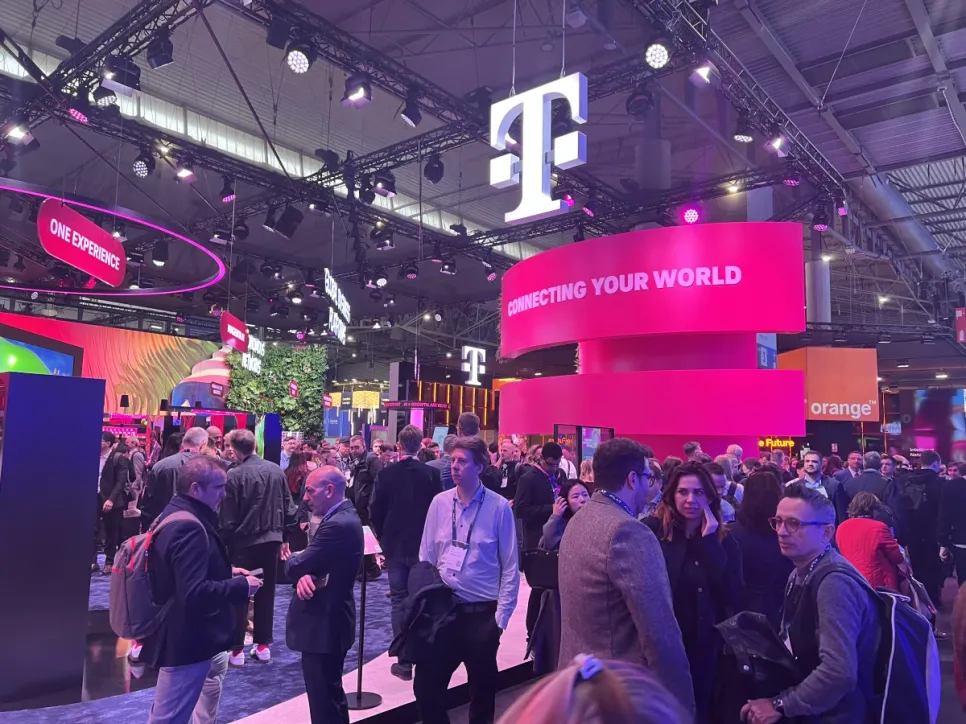
Deutsche Telekom has reached 99% population coverage with its domestic 5G network ahead of schedule. Upgrades and new deployments conducted in August took DT to the coverage target earlier than its original year-end deadline.
The company commissioned 132 new sites and upped the capacity at 533 others, with 5G activated for the first time at 128 of those. Fresh site deployments covered key regions including North Rhine-Westphalia, Bavaria, and Baden-Württemberg. Deutsche Telekom’s upgrades also benefitted its 4G coverage, which it noted stood at close to 100% by the end of August.
The operator explained its work advanced a goal to deliver an ultra-high-capacity network which offers download data rates of 1GB/s per cell across 90 per cent of locations. The low-band 700MHz, 800MHz, and 900MHz frequencies being employed offer long range and good network coverage, even in buildings, it stated.
These will be paired with mid-band 1500MHz, 1800MHz, and 2100MHz frequencies, offering high transmission rates and swift response times, with a 3.6GHz option to be used at traffic hubs. DT intends to employ a fiber backbone, with 85% of locations set for connectivity with data rates in excess of 10GB/s.
We spoke with Adrian Ježina, President of the Management Board and CEO of Telemach Croatia, about strategic decisions, investments, and how he sees the telecom industry evolving in the years ahead.
Croatia’s fixed broadband market in 2025 was marked by intense competition among operators, visible technological progress, and a gradual shift toward very high-capacity networks, primarily FTTH infrastructure. This is clearly confirmed by the “Barometer of Fixed Internet Connections in Croatia,” published by nPerf in January 2026, covering measurement results from 1 January to 31 December 2025.