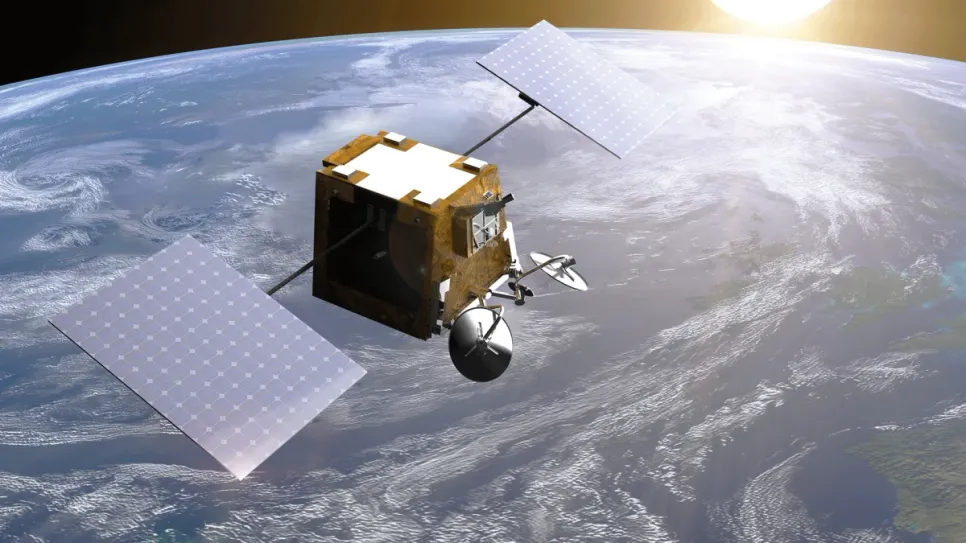
Eutelsat ordered another set of OneWeb low Earth orbit (LEO) satellites from Airbus Defence and Space. The service provider plans to employ new birds in bulking out and modernising its current fleet.
Airbus is tasked with providing a further 340 satellites on top of an order for 100 Eutelsat placed in December 2024. The satellite service provider stated the additions would complement the 600 birds already providing high-speed internet services, along with ensuring full operational continuity by gradually replacing equipment approaching the end of its working life.
Eutelsat CEO Jean-Francois Fallacher highlighted the company's long-standing relationship and said that the additional birds will enable them to pursue the growth path, building on the 80% topline expansion delivered in 2025. The latest OneWeb satellites are due to feature technology upgrades, including advanced digital channelisers, which the company stated will increase onboard processing capability, efficiency, and flexibility.
The provider intends to employ the fresh capabilities to explore potential additional business cases, building on its B2B core. Airbus is to manufacture the latest LEOs in a new production line installed at a facility in Toulouse, France. Deliveries are scheduled to commence at the end of the year. Alain Faure, head of space systems at Airbus, said the companies have partnered for 30 years, and Eutelsat’s contract is an endorsement of their design and manufacturing expertise in the LEO satellite space.
We spoke with Adrian Ježina, President of the Management Board and CEO of Telemach Croatia, about strategic decisions, investments, and how he sees the telecom industry evolving in the years ahead.
Croatia’s fixed broadband market in 2025 was marked by intense competition among operators, visible technological progress, and a gradual shift toward very high-capacity networks, primarily FTTH infrastructure. This is clearly confirmed by the “Barometer of Fixed Internet Connections in Croatia,” published by nPerf in January 2026, covering measurement results from 1 January to 31 December 2025.