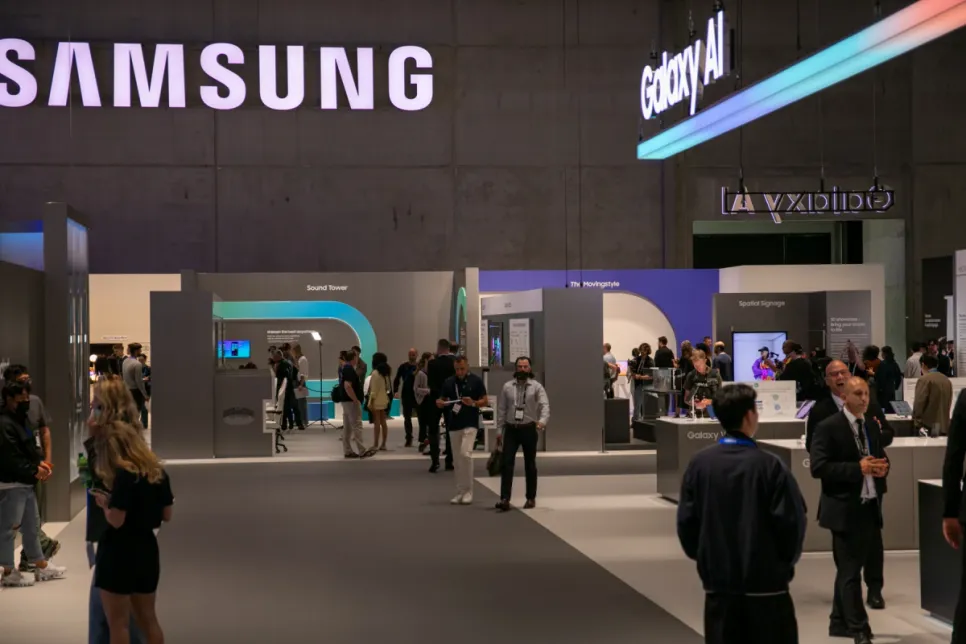
Vodafone has selected Samsung to deploy a large-scale open RAN across multiple European countries. This gets Samsung a broader deal after being left out of a recent contract award for the group’s UK-based unit network build-out.
The South Korean vendor noted it will deliver its virtualised RAN (vRAN) and open RAN equipment, with support across 2G, 4G, and 5G, as well as O-RAN-compliant radios. The vendor argued that vRAN serves as an optimal foundation for AI, enabling operators to seamlessly integrate AI capabilities into their networks. The upgraded radios and software capabilities improve energy efficiency and performance, and support RAN sharing, Samsung said.
Last month, VodafoneThree awarded eight-year contracts, valued at more than £2 billion, to Ericsson and Nokia to build out the newly formed UK operator’s mobile network, with Samsung not included in the 5G deployment. Vodafone Group head of open RAN Paco Martin said last November it was in the process of finalizing its open RAN tender, stating at the time the technology is already commercial and delivering for the company.
We spoke with Adrian Ježina, President of the Management Board and CEO of Telemach Croatia, about strategic decisions, investments, and how he sees the telecom industry evolving in the years ahead.
Croatia’s fixed broadband market in 2025 was marked by intense competition among operators, visible technological progress, and a gradual shift toward very high-capacity networks, primarily FTTH infrastructure. This is clearly confirmed by the “Barometer of Fixed Internet Connections in Croatia,” published by nPerf in January 2026, covering measurement results from 1 January to 31 December 2025.